
 Critical Connections: Improving SP and OR Synergy
  Sterilization Quality Control: Your Path to Protecting Your Patients
  Ensuring Success: Become a Preceptor for Robotic Assisted Surgery Instruments in the Sterile Processing Department
  Lost in Translation: Ethical Dilemmas in Medical Manufacturing Instructions
  What Sterile Processing Should Know About Multidrug-Resistant Organisms (MDRO)
  Making the Right Choice for Sterile Processing Consumable Stock Outages
 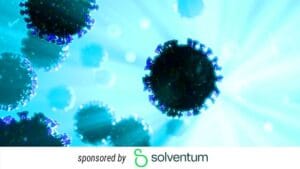 UV-C Disinfection Technologies: How it works and what are the current applications for health care settings
 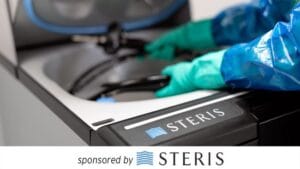 The Differences Between Peracetic Acid High-level Disinfectants and Sterilants
  The Mystery of Bowie & Dick: Alterations in the Vacuum on Your Sterilizer Throughout the Year
 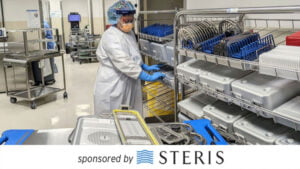 Meeting the Challenges of Endoscope Reprocessing and Documentation
  Education Nation: Sterile Processing Quality Management Systems
 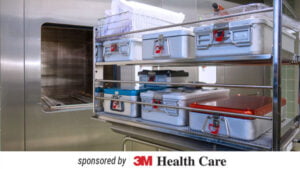 Product testing: The overlooked 4th pillar of a robust sterilization process monitoring program
  Importance of Water Quality for Medical Device Reprocessing
  Mechanical Cleaning Safety: A Tale of Two Sides
  Sterilization Choices for the SPD
  When Is Disposable the Right Choice for SPD?
  Education Nation: Sterile Processing Leadership Planning Sessions
  How Safe Is Your Sink?
  Sterile Processing Education – The balancing act between documentation and application
  Moisture Absorption Devices….No This Is Not a Wet Pack Article
  Positive Biological Indicators
 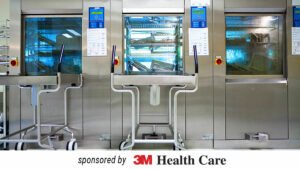 Washer disinfector release for use after maintenance
  Beyond the visual: The importance of quality cleaning verification programs
  Education nation: Creating Sterile Processing Department SOPs
 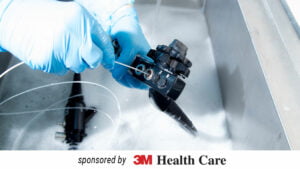 Cross out cross contamination in endoscope processing
  What’s new in AAMI ST79:2017? A review
  Healthcare soils 101: Identifying and removing them
  Expiration dating in the SPD
  The Science of Speed
  The fantastic four: Sterile processing, operating room, quality and education
  Ugh! Another wet pack. What’s a technician to do?
  Sterilization quality control: Validation, routine monitoring go hand in hand
  Manual cleaning – The critical human element
  Water for cleaning medical devices
  Can you afford to ignore obsolescence?
  Automatic Equipment and Productivity in a Sterile Processing Department
  External Transport of Medical Devices
  Troubleshooting Washer-Disinfector Performance
 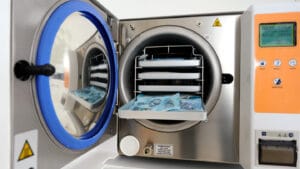 Understanding Bowie-Dick Testing: Purpose and Usage in Daily Sterilization Practice
  Understanding the Key Features and Benefits of Mechanical Cleaning Tools: Ultrasonic Baths, Water Guns, and Washer-Disinfectors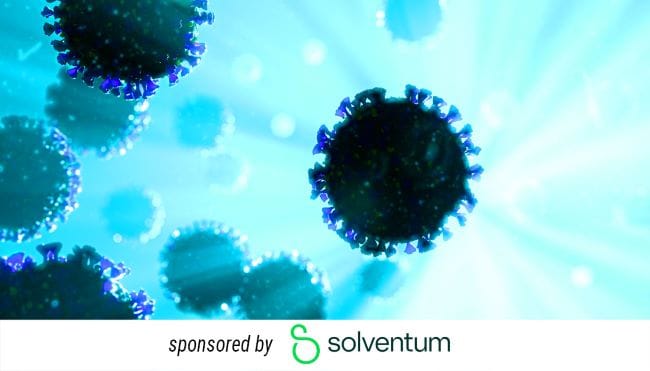
By William Leiva, MBA, MPH
In the constant search for effectiveness, productivity, and risk reduction strategies to address the potential spread of infections through surfaces, we have seen multiple advancements over the years. Until 1970, bleach was widely used as a surface disinfectant in many settings, including healthcare facilities. However, other disinfectants gained popularity thanks to cost reduction and compatibility benefits, prevention of surface damage, and more effective disinfection. While currently quaternary ammonium compounds, peracetic acid, and hydrogen peroxide solutions are commonly used as surface disinfectants, they require a consistent process to ensure adequate surface disinfection, including adequate dilution, contact time, and thorough exposure of the area to be disinfected, which makes the disinfection process time-consuming. In order to address the potential gaps of surface disinfection, newer technologies such as ultraviolet light in the C spectrum (UV-C) have become available in multiple settings. UV-C use as a disinfecting agent has been documented as far back as 1877, with evidence of its effects on Mycobacterium tuberculosis in 1903, and further applications for water treatment in 1910.
UV-C is a very specific type of radiation that can penetrate the surface of some microorganisms, viruses, and fungi, delivering surface disinfection. Due to its high energy, UV-C is harmful to eyes and skin. Most systems currently available use a blue light when operating; this light does not increase effectiveness or deliver microbial inactivation, but is a way to inform the personnel the system is in use and the areas being disinfected should not be entered.
Learning Objectives
- Understand the principles of UV-C disinfection technology.
- Summarize current applications in healthcare settings
- Analyze the potential implementation of UV-C systems in hospital settings.
About the Author
Willliam Leiva, Senior Program Manager for Sterile Reprocessing, Medtronic

Willliam Leiva holds undergraduate degrees in physics and engineering and master’s degrees in business administration and public health, where he focused his research on infection prevention strategies involving medical device reprocessing. He is currently a candidate for a Ph.D. in Cybernetics and Econometrics, researching around the economic impact of the burden of premature mortality. He has published peer review articles on the application of 3D printing technologies for medical devices and for austere environments.

Course Includes
- 1 Lesson
- 1 Test
- Course Certificate
The CBSPD (Certification Board for Sterile Processing and Distribution) has pre-approved this in-service for one (1) contact hour for a period of five (5) years from the date of original publication. Successful completion of the lesson and post test must be documented by facility management and those records maintained by the individual until re-certification is required.
DO NOT SEND LESSON OR TEST TO CBSPD.
For additional information regarding certification contact CBSPD – 148 Main Street, Suite C-1, Lebanon, NJ 08833

HSPA (Healthcare Sterile Processing Association) has pre-approved this in-service for 1.0 Continuing Education Credits for a period of three years.
For more information, direct any questions to Healthcare Purchasing News (941) 259-0832.