
By Brian Kirk
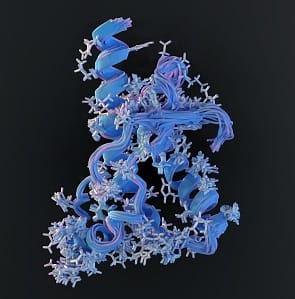
Creutzfeldt-Jacob Disease (CJD) is one of several transmissible spongiform encephalopathies (TSEs), which are characterized by the accumulation of abnormal forms of the prion protein.1 Clinically, CJD presents as a progressive deterioration of brain function arising from the buildup of misfolded proteins within the brain, which impair normal function, ultimately causing tissue damage. Histological examination indicates the formation of microscopic vacuoles within brain tissue, making it appear sponge-like, hence the use of the term “spongiform”. All known prion diseases are invariably fatal.
Learning Objectives
- Describe routes of prion transmission relevant to sterile service departments.
- Explain the limitations of conventional reprocessing on prions.
- Identify sterile processing practices used to manage potential prion exposure.
- Recognize limitations of sterilization technologies and how monitoring systems affect prion risk management in sterile processing.
About the Author

Dr. Brian Kirk BSc, MSC, PhD, MRPharmS, FIHEEM, AE(D)

Course Includes
- 1 Lesson
- 1 Test
- Course Certificate
The CBSPD (Certification Board for Sterile Processing and Distribution) has pre-approved this in-service for one (1) contact hour for a period of five (5) years from the date of original publication. Successful completion of the lesson and post test must be documented by facility management and those records maintained by the individual until re-certification is required.
DO NOT SEND LESSON OR TEST TO CBSPD.
For additional information regarding certification contact CBSPD – 148 Main Street, Suite C-1, Lebanon, NJ 08833

HSPA (Healthcare Sterile Processing Association) has pre-approved this in-service for 1.0 Continuing Education Credits for a period of three years.
For more information, direct any questions to Healthcare Purchasing News (941) 259-0832.